
CNY Melbourne

Melbourne Chinese New Year

Chinese New Year Melbourne

About Destination Melbourne

This author has not yet filled in any details.
So far Destination Melbourne has created 17 blog entries.

It’s the lucky number

If you’ve got a good memory – for events or numbers – you might remember that the Beijing Summer Olympics started at eight minutes past eight on 8/8/08. Which will give you some idea of the significance of the number eight.

Chinese people have long considered it the luckiest number, and will include it in their decision making whenever it’s possible, whether they’re buying a home, getting a new telephone number or picking a date for a wedding. The reason it’s considered such good luck is mainly because the word for eight – ba – sounds very similar to fa, which means prosperity. It’s also perfectly symmetrical, whether you cut it in half horizontally or vertically, which indicates perfect balance.

People who are eights tend to have good insight and strong intuition. They are honest and ambitious and tend to make great leaders and natural business people.

If you’re looking for even more good luck, your number is 88. The stylised Chinese characters that symbolise joy come together to create double joy. Eureka Skydeck is located on the very auspicious 88th floor of Eureka Tower at Southbank and is celebrating Chinese New Year in style. Tie your wish for the year to a two-metre-tall shaped-wire 88, before discovering your Chinese zodiac and checking out the spectacular view. From here, you’re on the southern hemisphere’s highest view platform, almost 300 metres above the ground.
 

‘Pandamonieum’ at the zoo

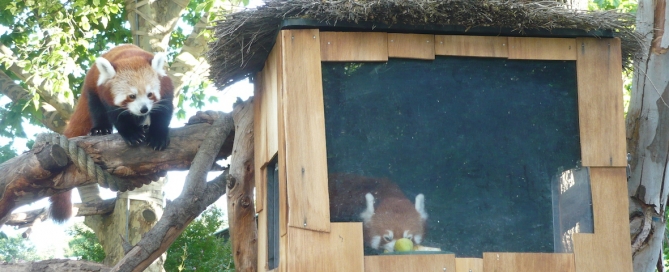
When most people think of pandas their minds immediately turn to the big, black-and-white bears who inhabit bamboo forests. But at Melbourne Zoo, there’s another type of panda and to find them you’ll have to look up.

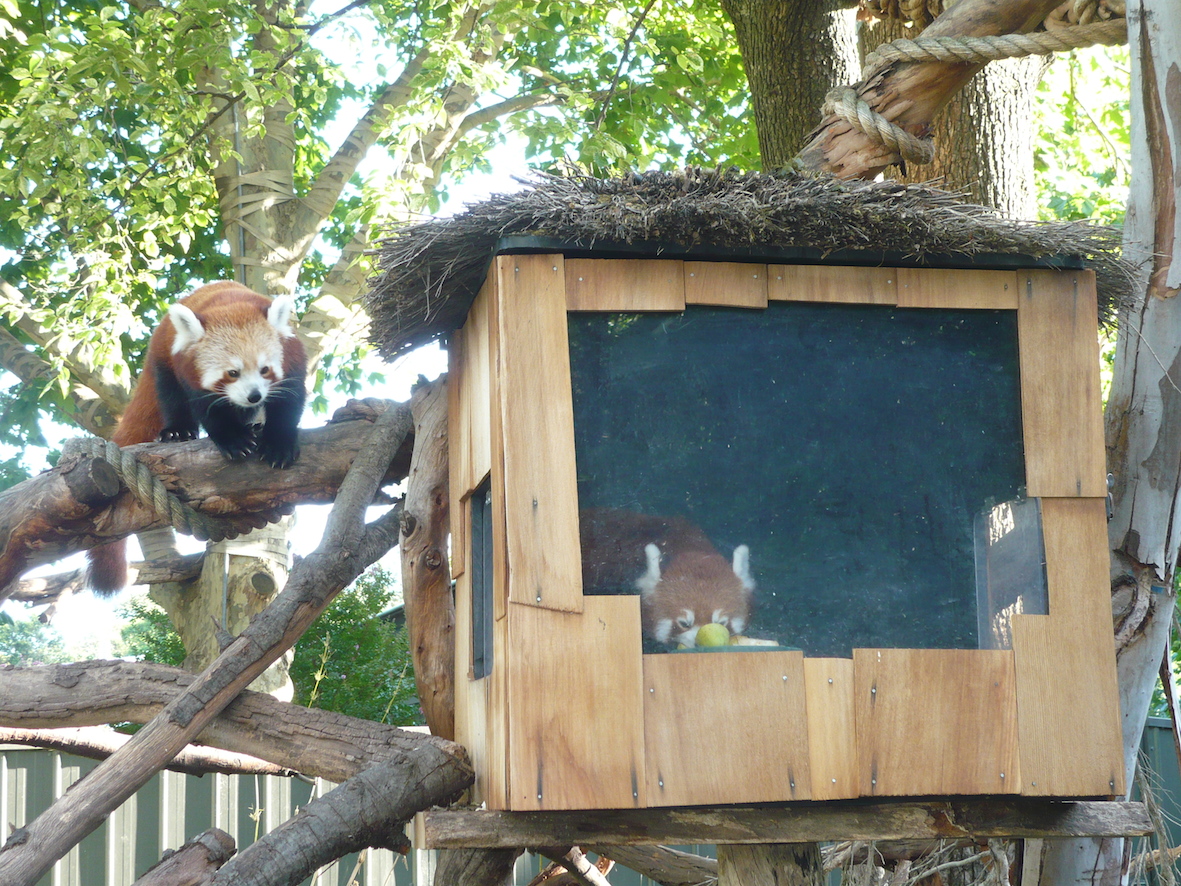
Five-year-old male red panda Seba lives at Melbourne Zoo with his female mate Roshani. They spend most of their days high up in a tree, and you can see visitors looking upwards trying to catch a glimpse or a photo of the furry pair. The pandas are inseparable. They spend their days cuddling, snacking on bamboo and keeping warm in their nest box in the trees. Keepers are hopeful the red pandas will breed.

Red pandas are native to Nepal, China and India, but their numbers in the wild are decreasing mainly due to habitat loss, hunting and poaching. They are on the International Union for Conservation of Nature Red List of Threatened Species and it’s thought there are fewer than 10,000 grown red pandas left in their natural environment. By breeding red pandas in captivity, zoos around the world play an important role in conservation efforts for these creatures.

Red pandas are very gentle by nature and are definitely a crowd favourite at Melbourne Zoo. Their stunning red coat and very soft fur – they even have hair on their paws for when they have to walk on snow (which admittedly isn’t a regular occurrence in their current habitat!) – helps insulate them from the cold in their natural environment. They’re not big animals, usually measuring between 30 and 50 centimetres long, but two thirds of that length is actually their bushy tail, which they use to balance when they’re in trees.

Don’t forget to go see Seba and Roshani the next time you visit the zoo, and remember that kids who dress up as either a goat or a sheep during Chinese New Year (until 28 February) get free admission to Melbourne Zoo, Werribee Open Range Zoo or Healesville Sanctuary.


See the lions dance

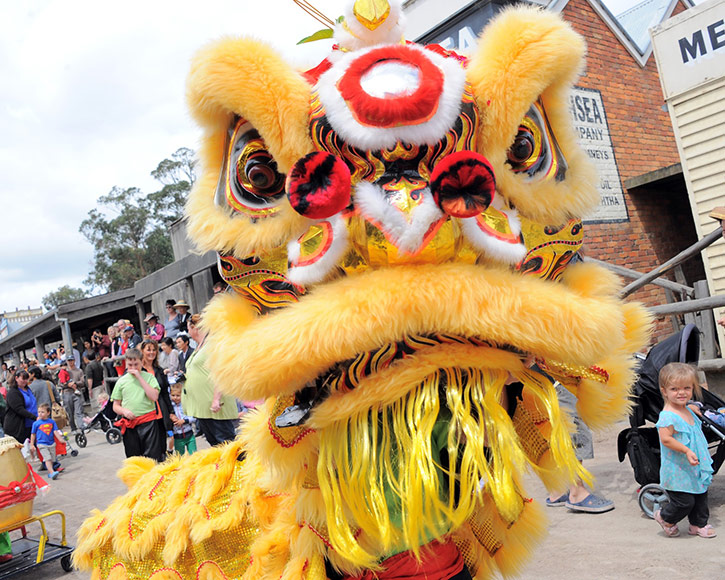
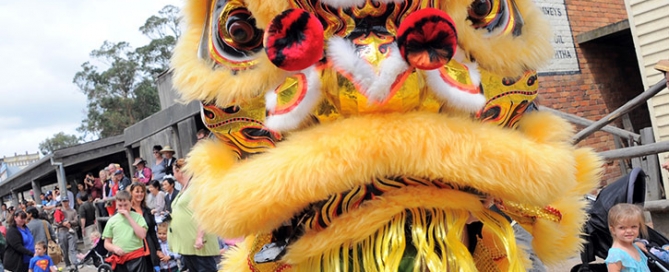
The Chinese Australian Cultural Society Ballarat is welcoming two very special new additions to its pride this Chinese New Year. At Sovereign Hill on Sunday 22 February, the members of the lion team will be waking up a pair of new red lions as part of the celebration. We spoke to lion team leader Jessica Philips about the day, her team and Chinese lions.

What are the roles of lions and dragons, symbolically? Dragons are the guardians of heaven. On the ground they don’t have any strength. Lions are the guardians of the earth, and they protect the dragons when they’re here. The lions are always in front of the dragons looking after them.

How many people are involved in the lion team? There are about 12 kids of differing ages. The youngest is three or four – he just comes along and does what he can – and the oldest is 20. Obviously we’d like that number to grow. Most of them are Chinese kids whose parents are involved in the association, but others found out about it through the school.

How long does it take the team to prepare for the Sovereign Hill Chinese New Year celebrations? We train once a week during school term for about two hours at a time. As far as the performance on Sunday goes, planning started at the beginning of December.

What part do lions play in the celebrations, apart from protecting the dragon? Lions lead the parade and scare away all the evil spirits. They also perform on obstacles, which symbolises getting over obstacles in your life.

Sovereign Hill’s Chinese New Year celebrations begin at 10am on Sunday 22 February. The new lions will be woken at 10.45am at the Chinese Temple. You can also try lion dancing at a workshop at the Victoria Theatre at 12.30pm.


Enter the dragon

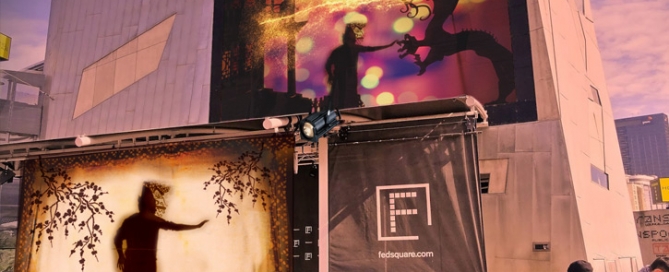
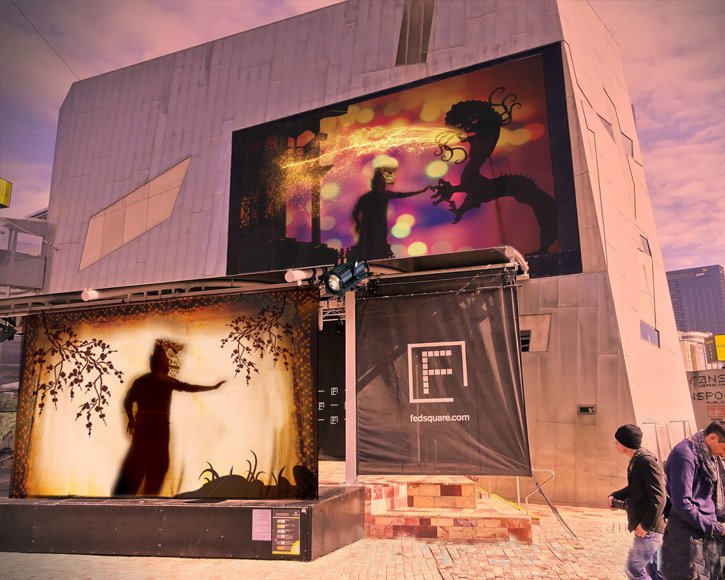
During the Chinese New Year festivities, visitors to Federation Square will have the opportunity to take part in an interactive, multimedia event, Electric Dragon. Melbourne artist Georgie Pinn has written and created an animated fable about Fang the Dragon, a morphing, eclectic beast who must travel the world to discover his identity. The starting point is a film, but audience members then become characters as they go onstage, design their own dragons and, in real time, animate the creature with their own bodies behind a shadow screen. Combining traditional shadow puppetry with high-tech motion tracking, this is an experience that is both emotionally and physically engaging. We spoke to Georgie about creating the show.

How long does it take to create a show like Electric Dragon, and what was the most challenging aspect? I have been working conceptually on the project for more than a year, but obviously my creative journey to bring me to this has been a much longer story. There are two really challenging aspects. The first is the time-consuming aspect of the animation and the intensity of work it requires to make just seconds [of footage]. This is a labour of love and one of my favourite things is the challenge of breathing life into inanimate objects and images and giving them personality. The second was the preliminary tech development for the interactive side of the project, but I’ve been lucky enough to study with and learn from some great creative technologists.

This is another iteration of your Electric Puppet project. In the past, how have you found adults and children differ in their interactions with the animation? It’s become clear there are no restrictions. It’s more about how much you want to be involved and where your imagination takes you. There are different virtual triggers that do different things to the dragon and his environment. However, this project is a narrative-based play, so although younger ones will be quicker to discover the payoffs of the interactivity, the adults will tend drive the story more with their movements.

You do everything on your projects, from creating the technology to writing your own music. How important is it to have complete creative control over a project? Are there times when you want to invite collaboration? It’s true, I am involved in every layer of the project and I do feel that is integral to how it evolves. I have always been a multimedia artist who makes and uses sound FX, music, performance, video, animation and digital installation/projection as my palette. I do think it strengthens and consolidates both the aesthetic and concept of a project when one is self-sufficient and able to play and experiment independently. However, I have also directed and collaborated on many projects where you jump even further to the next level creatively through learning and inspiring each other. A fresh perspective is majorly important to balance out the “bubble mode”.

Electric Dragon is the latest commission by Fed Square’s Creative Program. You can see it at the Main Stage from 26 February to 1 March at 8pm.

Start the New Year right

Happy Chinese New Year from Central Equity. May the Year of the Goat bring you peace and prosperity!

Multi-award-winning developer Central Equity has been a proud supporter of Chinese communities in Australia for more than 20 years. As an Australian-owned business, the company is proud to have played a small part in the huge contribution the Australian–Chinese community has made to the fabric of Australian society.

The New Year is a great time to contemplate and plan your property investments for the coming 12 months. Central Equity – with its diverse range of new apartments, houses and land for sale, as well as its one-stop shop for after-sales service – is more than happy to assist you with your purchase of residential properties.

After a very successful sales campaign, construction has commenced on Central Equity’s newest city centre apartment complex, Australis. There are currently a limited number of apartments available for sale, but if the popularity of the project so far is any indication, they will sell fast. Stamp Duty savings of up to $45,000 (off the plan) are still available for a limited time.

Central Equity is also behind thriving communities in popular suburbs of Melbourne: Featherbrook in Point Cook, Gateway in Truganina and Berry Lane in Mernda. New land is now available in all three estates. Inspect a variety of land sizes and orientations to suit a choice of house designs. For more information, visit the Central Equity website or call 1800 898 095.


The colours of the New Year

When you look towards Docklands on Thursday evening (19 February), you’ll see the Melbourne Star Observation Wheel beaming red and gold lights across the night sky to welcome the Year of the Goat. Why? Both colours are significant in the Chinese culture.

Red is all about good fortune and joy. During New Year festivities, children will often be given money in red envelopes as a blessing for the year to come. It symbolises prosperity in their futures. If you’ve ever attended a Chinese wedding, you’ll have noticed red is well represented. After all it is the shade of good luck and happiness.

Gold (or yellow), on the other hand, is considered one of the most beautiful hues and was used widely in ancient China where it was the symbolic colour of the five legendary emperors. You can see it used as decoration throughout the royal palaces and temples of Imperial China. It signifies neutrality – it’s said to generate yin and yang – and good luck. Unlike in western cultures, where yellow is often used to represent cowardice, in China it equates to heroism.

The red and gold lights of Melbourne Star will be a one-off event, taking place from dusk until midnight on 19 February and making the perfect backdrop for Melbourne’s Chinese New Year celebrations. The Melbourne Star will operate as normal on the night, with the last flight departing at 9.30pm.


Something fishy this Chinese New Year

During Chinese New Year, SEA LIFE Melbourne Aquarium is offering a 20 per cent discount on all tickets – for both adults and children – bought on site. You can check out the Bay of Rays, marvel at the penguins, meet Pinjarra (one of Australia’s biggest salties) at Croc Lair, and walk beneath the ocean.

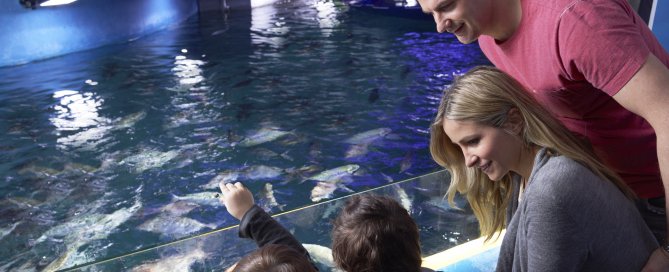
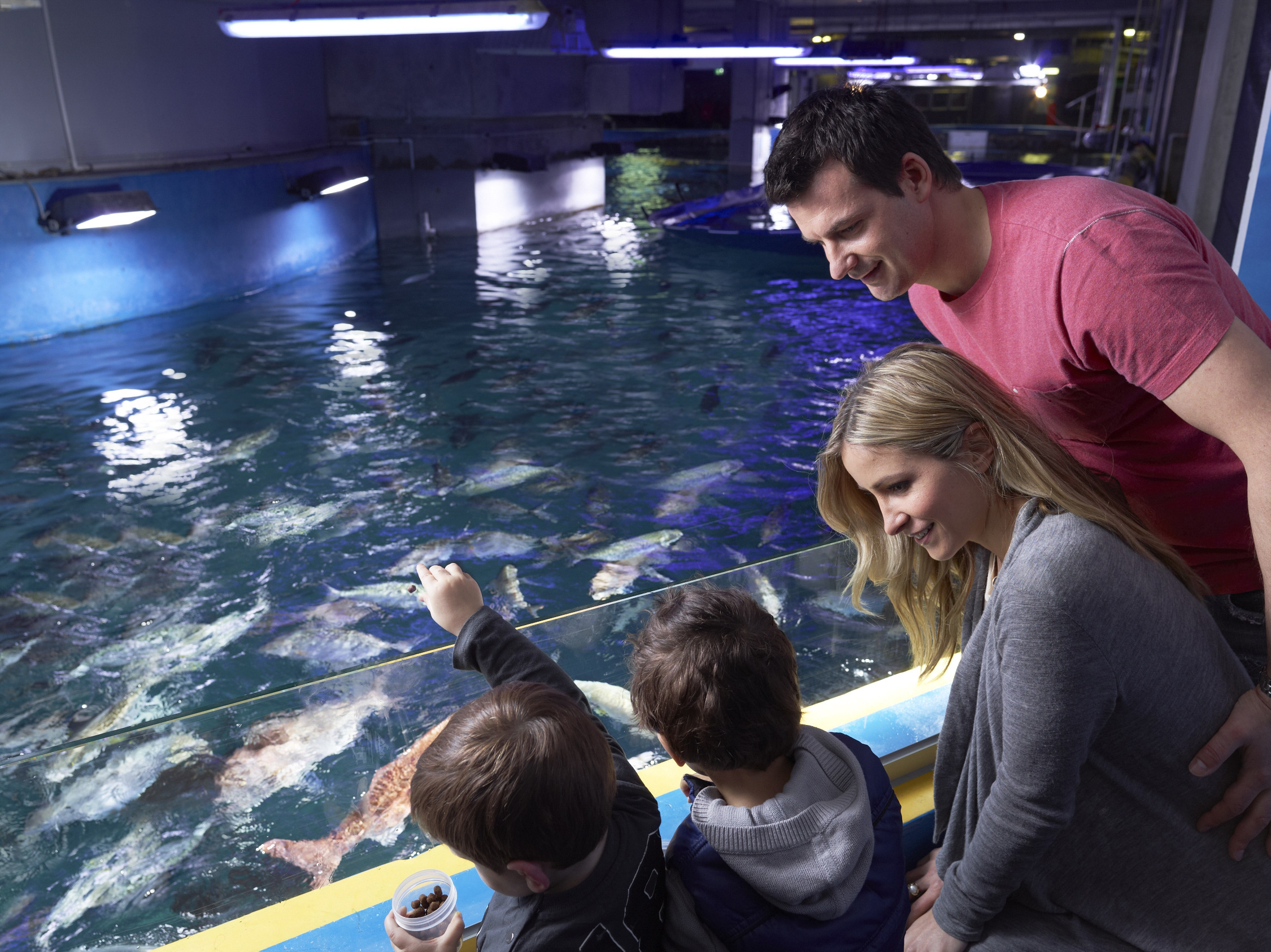
But did you know there’s also the opportunity to get up close and personal with some of SEA LIFE’s residents? You could use the money you’ve saved on your ticket to take part in a fish-feeding experience. At the top of the 2.2 million litre Oceanarium you’ll throw food pellets into the water and watch hundreds of brightly coloured snapper, trevally, salmon and bream swirl about the surface. There are only a limited number of the $5 tickets available each day, so make sure you get in early. There are also Behind the Scenes Tours available ($20 standard, $15 child), where visitors can see the food prep areas, and visit the vet office, research laboratory, dive zone and quarantine area, as well as look into the top of the Oceanarium. Behind the Scenes Tours can be booked by calling (03) 9923 5911 or visiting the Information Desk at SEA LIFE Melbourne Aquarium.

For more information, head to the SEA LIFE Melbourne Aquarium website.

A time to dine

While there are plenty of festivals and events where you can eat till you’re stuffed during Chinese New Year, Melbourne also has some excellent eateries that are perfect for getting into the spirit of the celebrations. Here are five you might like to try (in no particular order)…


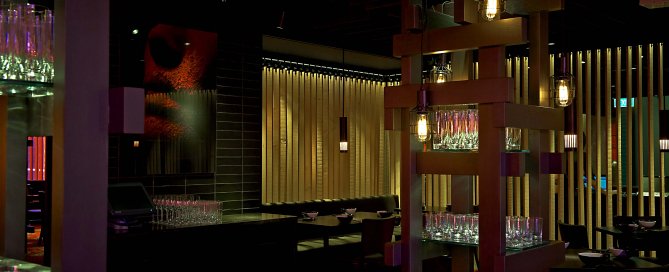
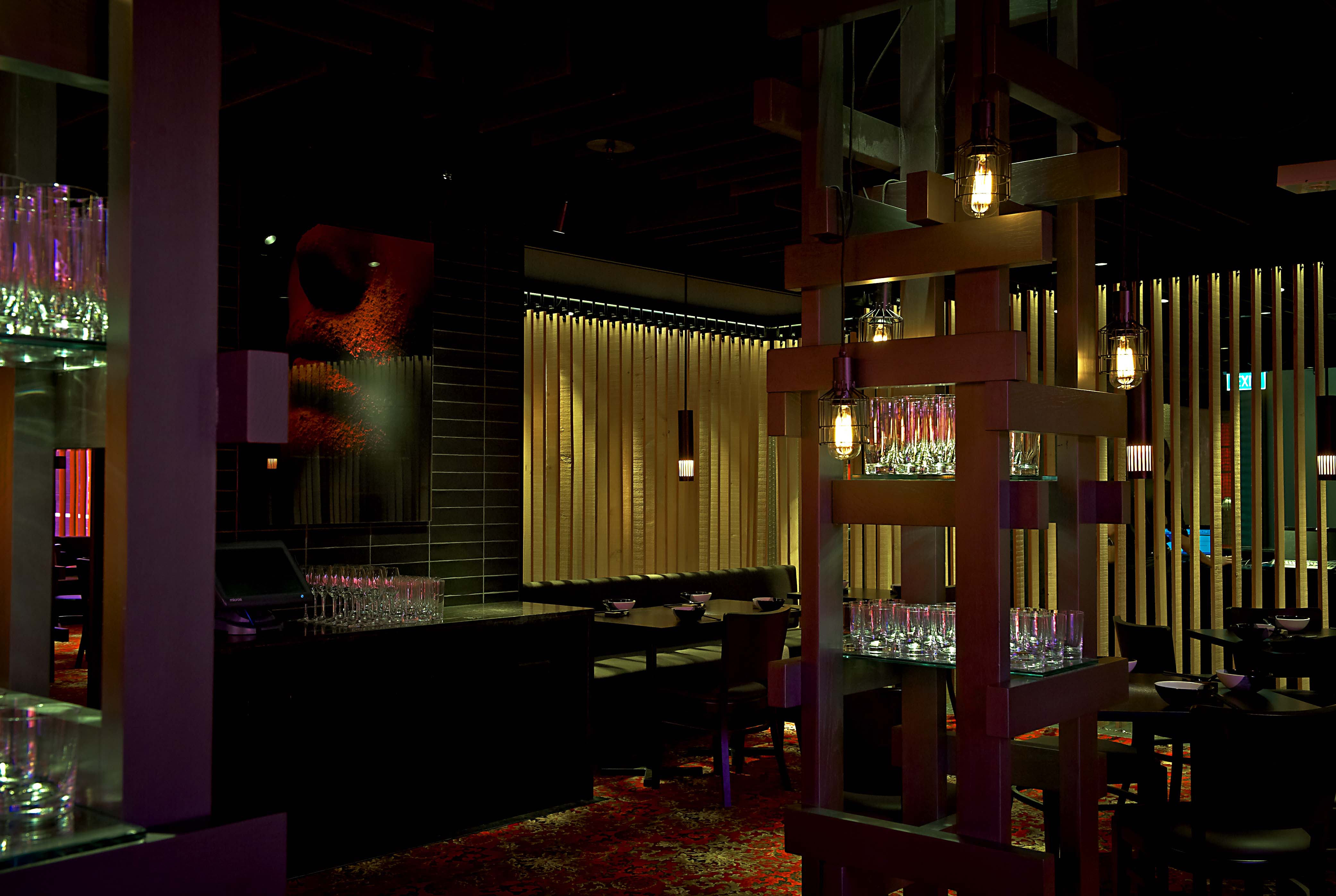
Spice Temple Crown Melbourne (pictured)
Neil Perry’s salute to regional China is also one of the more stylish Asian restaurants you’re likely to try. During Lunar New Year celebrations, from 13 February until 1 March, there’ll be a special 10-course banquet design to promote health, wealth and happiness.


Hutong Dumpling Bar Chinatown and Prahran
Three words: shao long bao. These soup-filled dumplings are the specialty of the house, but there’s plenty more on the menu you’ll want to try. If you like it hot, the scallop and eggplant in a claypot with Szechuan chilli sauce is a winner.


Dainty Sichuan Chinatown, South Yarra and Box Hill
If you like your food fiery, get yourself to one of these three popular spots. The specialty is a cook-at-the-table steamboat, where you dunk your chosen ingredients ­– meat, fish, veggies, noodles ­– into broth then top with any of the 30 or so hot sauces.


Old Kingdom Fitzroy
There is one perfectly crispy reason to head to this stalwart – the Peking duck. The first course is the glistening skin wrapped in wafer-thin pancakes. The next stir-fried duck with bean shoots, and the final a light duck broth. Book a table and make sure you pre-order your duck so you don’t miss out.


Supper Inn Chinatown
There are no frills within the faux wood-panelled walls of this laneway haunt, beloved of chefs and revellers thanks to its excellent Cantonese dishes and late hours (it stays open until 2am). Go-to dishes include congee, suckling pig and steamed oysters.


A writer’s place in the world

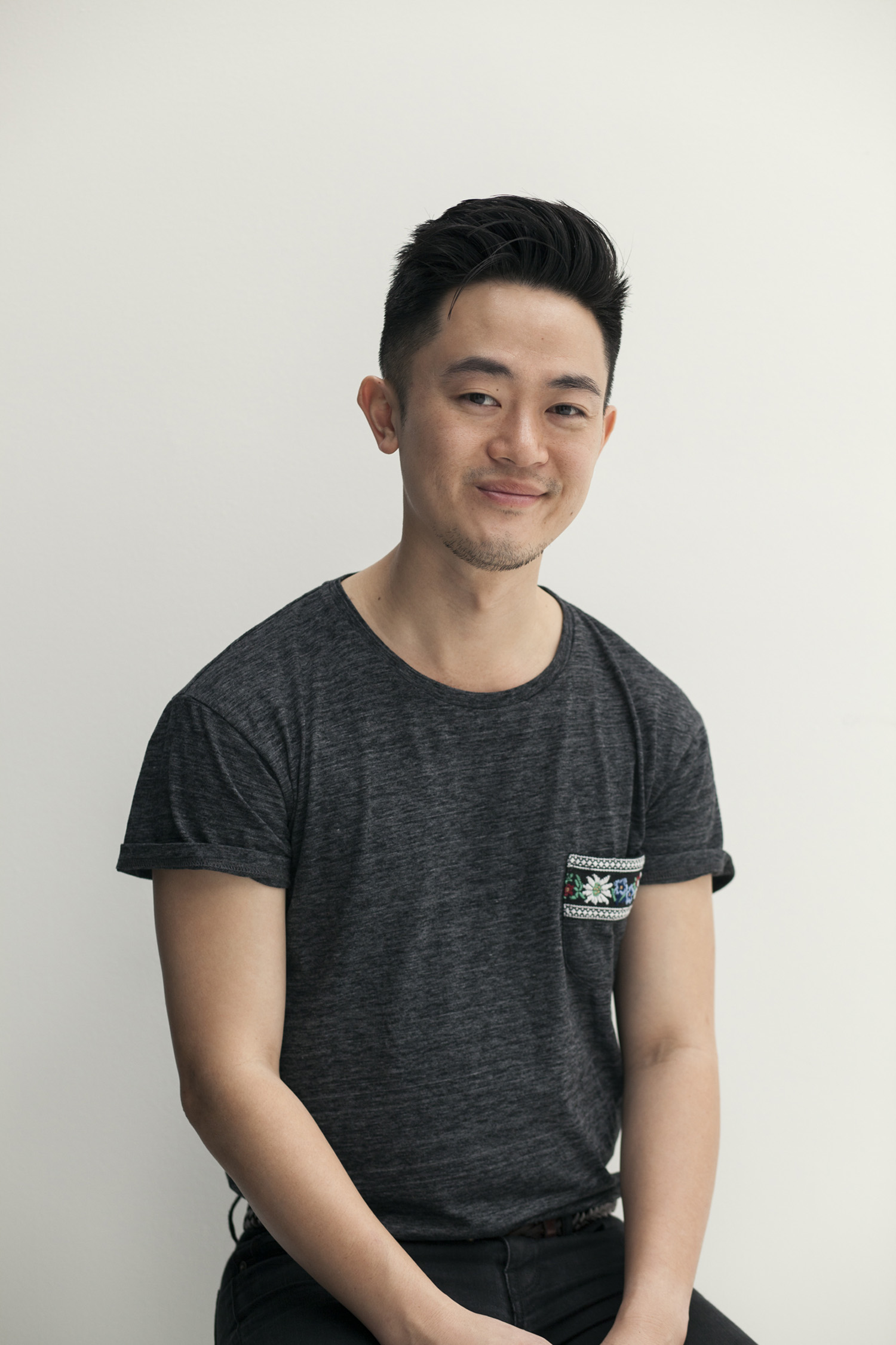
What’s it like being different from all the other kids? Director Tony Ayres, artist William Yang, cultural critic Juliana Qian and writer Benjamin Law are going to talk about that very topic at Growing Up Chinese in Australia (24 February), part of ACMI’s China Up Close series of exhibitions, films and performances. Here, Benjamin – journalist, screenwriter and author of two books The Family Law and Gaysia: Adventures in the Queer East – gives us a preview.

What was it like growing up Chinese–Australian in Queensland? Did you see yourself and your family as different? Well, considering the Sunshine Coast in the ’80s and ’90s was blindingly white – both in sand and skin tone – I’m pretty sure we stood out. But luckily, being ethnic had a bit of cred when I was in primary school. Expo ’88 meant everyone was interested in anything foreign, so I was the kid giving all my mates chopstick lessons over lunchtime. But then the ’90s hit, Pauline Hanson became huge, and suddenly there was a flotilla of cars bearing One Nation stickers picking kids up from school. Fun times!

Who were your role models when you were a teenager? Interestingly, nearly all of them were female. I was obsessed with Björk, PJ Harvey and Tori Amos as a teenager. And because I read about musicians so much, I guess other role models were the magazine writers who profiled musicians, like ex-Rolling Stone writer Chris Heath, whose writing is still spectacular.

How did your mum feel about you deciding to be a writer? Oh, she loves it. She follows me around writing festivals, armed with a video camera, like my number one fan.

How does your family celebrate Chinese New Year? We eat until we lose consciousness. I think this is probably true for most Chinese people. We do most of this in silence, as conversation expends precious energy you could otherwise devote to eating.

Whose story are you most interested in hearing at Growing Up Chinese in Australia? Hard pick. I’ve seen William Yang talk about his life in public before, and I could listen to him for hours. Tony Ayres is a mate and the executive producer of the TV show I’m working on, so same applies to him. But Juliana Qian is someone I haven’t yet met, and I’m dying to. She’s the Pokémon I’ll pick.

For more information and ticketing, go to the ACMI website.

Feast of plenty

It’s traditional for families to get together for a meal over Chinese New Year, and while there aren’t any special dishes that are served solely at this time of year, some are more traditional than others. Dumplings – since they symbolise prosperity – would definitely be on the menu. If you’re preparing your own Chinese New Year banquet, you might serve a plate of dumplings alongside roasted duck or pork (buy it to save time), beef with sizzled ginger and chilli, some stir-fried Chinese vegetables and steamed rice.

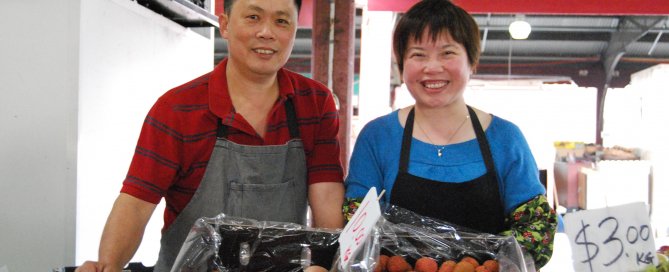
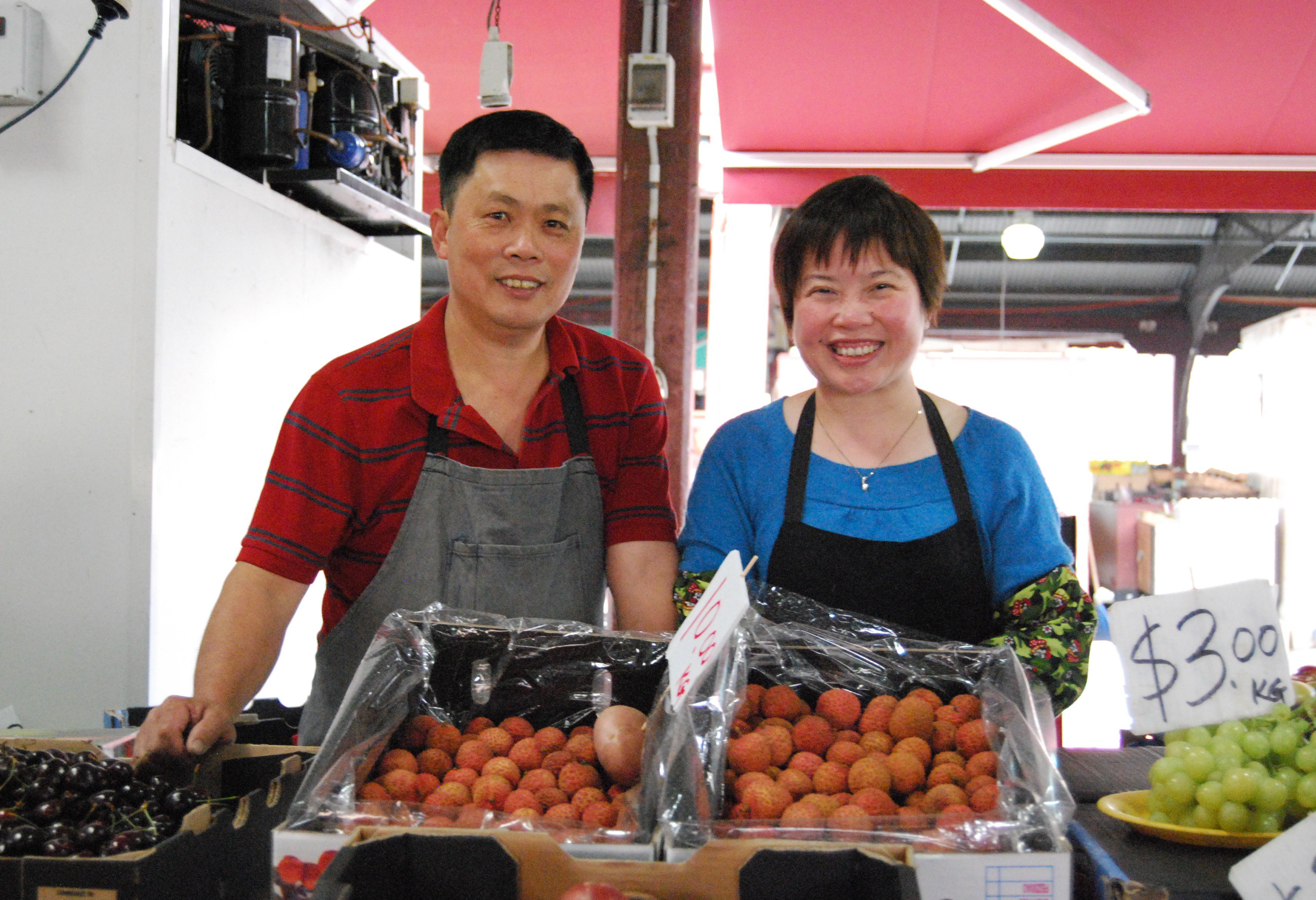
You can buy all the fresh produce you need to get the dinner party started at Queen Victoria Market. Head to the Meat & Fish Hall, the fruit and veg stands and the Deli Hall and start shopping. Throughout the Chinese New Year Festival, QVM will also be hosting a range of activities, including lion dances, dragon dances and a 15-metre-long dragon lighting up Queen Street.

For more information on Queen Victoria Market, including opening hours, head to the website.

Here’s a recipe for simple dumplings to get you started.

Too-easy Chinese dumplings

You can experiment with the fillings for these: use chicken mince, chopped raw prawns, even tofu and mushrooms if you’re a vegetarian.

1 tbs sesame oil

1 tsp grated ginger

1 tsp finely chopped garlic

3 green onions, chopped

250g pork mince

1 tbs chopped chives

1 tbs light soy sauce, plus ¼ cup extra

1 tbs Chinese rice wine

½ tsp white pepper

1 packet wonton wrappers

2 tbs Chinkiang vinegar

1 tbs white sugar

1 tbs chopped coriander leaves

Heat the sesame oil in a pan over medium heat. Add ginger, garlic and green onions and saute lightly for 1–2 minutes. Remove from heat. In a bowl, thoroughly combine the ginger mixture, mince, chives, sauce, rice wine and pepper.

Place a teaspoon of pork mixture into the centre of a wonton wrapper. Fold in half, wet around the edge with a damp finger or pastry brush, then press the edges firmly together. Repeat until you’ve used all the mixture. You should get 20 to 25 dumplings altogether.

The easiest way to cook these is in a single layer in a steamer basket lined with baking paper. Pour water into a wok or saucepan, place the steamer basket on top (it shouldn’t touch the water), bring to a boil and steam for 15–20 minutes.

Meanwhile combine the extra soy sauce, vinegar, sugar and coriander. Stir until combined and serve that as a dipping sauce with the dumplings.

The festival programme

Events Getting around